
Easy Oversized Crochet Cardigan Pattern Free
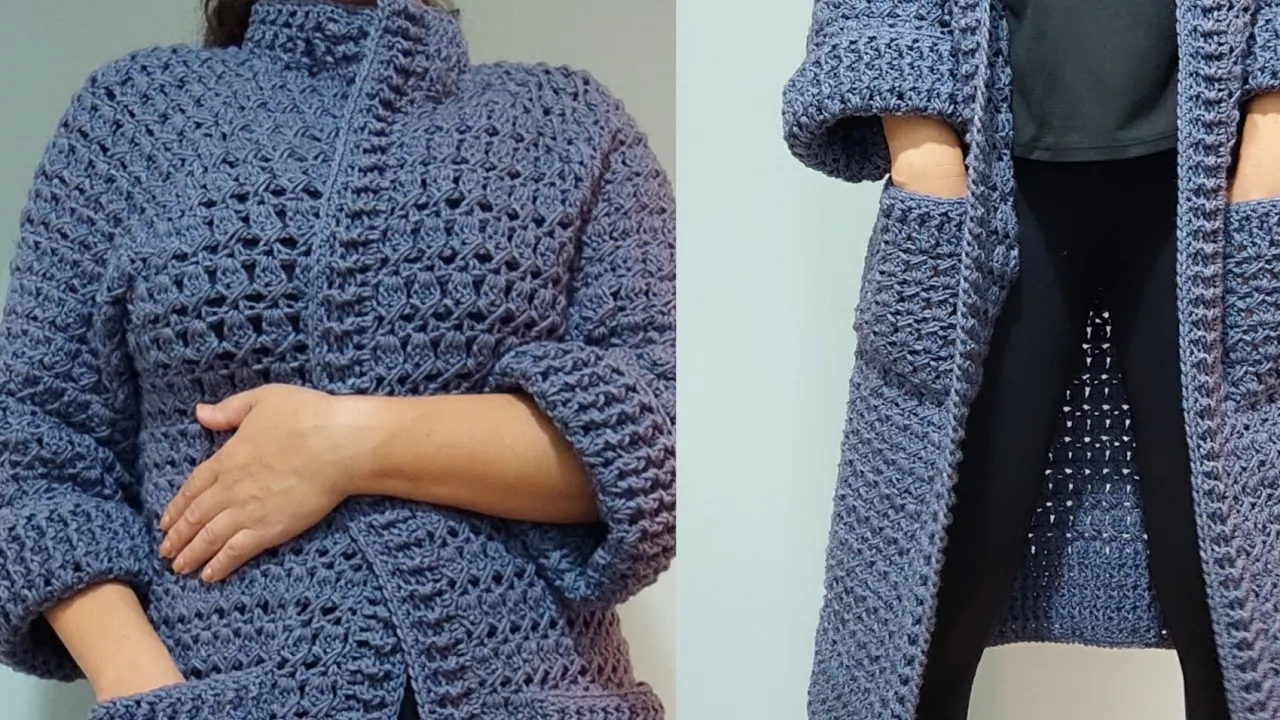
There's something truly special about slipping into a handmade crochet cardigan on a chilly morning. This one works up with simple stitches into a relaxed, oversized fit that layers beautifully over everything from tees to dresses. Soft worsted-weight yarn keeps it lightweight yet warm, and the straightforward construction means you'll see progress quickly.
Best part? You can customize the length or sleeves as you go. Searches for “crochet cardigan” surged over 250% in recent years, and with bohemian granny-square styles leading 2026 trends, this timeless piece feels fresh and on-point.
Ready to grab your hook? Let's dive in.
Why You'll Love This Crochet Cardigan Pattern
Versatile layering makes cardigans a wardrobe staple, and this design shines for everyday wear. The open front drapes effortlessly, while subtle texture adds interest without overwhelming beginners.
Current trends highlight oversized silhouettes and earthy tones, perfectly matching this relaxed fit. Pair it with jeans for casual outings or over a slip dress for evening vibes—it's that adaptable.
Affordable yarn options abound right now. Solid worsted acrylic skeins, like popular brands at Michaels or LoveCrafts, often run $4–$8 per 7oz ball in early 2026 sales, making a full adult cardigan budget-friendly.
One crocheter shared how her first cardigan became her go-to comfort piece during long work-from-home days. Mistakes happened along the way, but frogging a few rows taught more than any perfect swatch ever could.
Materials Needed
Gathering supplies feels like the exciting prelude to any project. For this relaxed crochet cardigan, keep things straightforward—no fancy extras required.
Yarn: Approximately 1200–1800 yards of worsted weight (category 4), depending on size. That's roughly 6–9 skeins of 200-yard balls for sizes XS–L, more for XL+.
Hook: 5.5 mm (I-9) US for the main body; optionally a 5 mm (H-8) for ribbing if you prefer tighter edges.
Essentials: Tapestry needle for weaving ends, stitch markers (locking ones work great), scissors, and a measuring tape.
A few safety pins double as markers in a pinch. Once, during a rushed start, those pins saved the day when real markers went missing mid-row.
Budget around $40–$80 total for yarn and tools if shopping sales—current early 2026 deals make it even friendlier.
Best Yarn Choices for Crochet Cardigan Pattern
Worsted weight strikes the perfect balance: warm without bulk, quick to work up, and forgiving for new makers. Drape comes naturally, avoiding that stiff feel some chunkier yarns give.
Top beginner pick: Cascade Yarns 220, a pure wool classic often on sale for $5.99–$7.49 per 220-yard skein at Yarn.com. It blocks beautifully and softens with wear.
For machine-washable ease, try Lion Brand Wool-Ease (80% acrylic/20% wool blend)—skeins hover around $6–$8 at Michaels or Joann, with excellent stitch definition.
Love super-soft? Malabrigo Rios, hand-dyed merino, runs higher but delivers luxury; check my best yarn for sweaters guide for similar premium options.
Acrylic fans rave about Premier Everyday Soft Worsted—anti-pilling and budget-friendly at about $5 per ball.
Earthy tones dominate 2026 trends, but neutrals layer endlessly. See comparisons in DK vs worsted weight yarn comparison if debating lighter alternatives.
One tester swapped in a wool-acrylic blend mid-project—slight gauge tweak, but the result stayed cozy and pill-resistant.
Gauge, Size Guide & Must-Have Tools
Gauge keeps everything fitting just right—trust it over blindly following rows. Swatch a 4x4 inch square in double crochet: aim for 14 stitches and 8 rows with 5.5 mm hook.
Tension varies, so adjust hook size if needed. Looser? Go down to 5 mm. Tighter? Up to 6 mm.
Sizes range XS–3XL, with positive ease for that slouchy vibe. Bust measurements: XS (28–32"), S (33–36"), up to 3XL (57–60"). Length hits mid-hip, but add/subtract repeats easily.
Pro tweak: For longer sleeves, work extra rows before cuff ribbing—many add 4–6 for tall frames.
Must-have tools beyond hook and yarn: Clover Amour ergonomic hooks top lists for comfort (sets ~$50–$60), reducing hand strain on big projects.
Tulip Etimo follows close—smooth glide, cushy grip. Beginners often start with affordable Boye or Susan Bates aluminum.
Stitch markers track panels; a yarn winder speeds skein prep—details in best yarn winders for crocheters.
That first cardigan taught tough lessons on gauge—too loose, it swam; remake fixed it perfectly. Measure as you go; small adjustments prevent big rip-backs.
Pattern Notes & Tips Before You Start
Taking a moment to read through notes saves so much time later. This cardigan builds from simple rectangles with minimal seaming—perfect for building confidence on a larger project.
Worked flat in rows, turning at the end of each. The construction starts with the back panel, then fronts, and sleeves separately before joining.
All stitches use standard US crochet terms. If you're used to UK terms, remember our double crochet equals your treble.
Positive ease built in: about 4–8 inches extra room for that cozy, slouchy fit trending hard in 2026 forecasts.
Gauge matters here—check it early. Slight differences add up over wide panels.
Customization shines: lengthen body by adding rows before ribbing, or shorten sleeves easily.
Blocking finishes beautifully with worsted yarns. Steam or wet block for professional drape; details in my easy crochet blocking tutorial if needed.
One early tester skipped seaming practice and felt lost joining sleeves—quick mattress stitch trial on scraps made all the difference.
Weave ends as you go to avoid a big finish session. Safety first: keep yarn away from pets and little ones.
Abbreviations Explained
Patterns pack a lot into few letters, but once familiar, they read smoothly. Here's every one used in this cardigan, with tips for success.
ch – chain: The foundation for nearly everything. Make them loose to avoid tight edges.
sl st – slip stitch: Great for joining or moving without height. Insert hook, yarn over, pull through all loops.
sc – single crochet: Short and sturdy—ideal for ribbing. Insert hook, yarn over, pull up loop, yarn over, pull through both.
hdc – half double crochet: A touch taller than sc. Yarn over first, then insert hook—gives nice texture in cuffs.
dc – double crochet: The main stitch here for speedy fabric. Yarn over, insert, pull up, (yarn over, through two) twice. Keep tension even for best drape.
FPdc – front post double crochet: Worked around post from front—creates ribbing raise. Yarn over, insert from front to back to front around post.
BPdc – back post double crochet: Opposite of above, from back. Pairs with FPdc for stretchy edges.
inc – increase: Simply work two stitches in one—used sparingly for gentle shaping.
RS/WS – right side/wrong side: RS faces out; mark if needed to track.
rep – repeat: Follow instructions in * or ( ) as directed.
st(s) – stitch(es): Basic counting unit.
Practice post stitches on a swatch first—they look tricky but click quickly. See them in action on my easy ribbed crochet beanie pattern free.
That first post-ribbing attempt looked wonky until consistent yarn overs fixed it—common fix, totally normal. You've mastered the language now; next comes the fun part.
Step-by-Step Crochet Cardigan Pattern
This relaxed, oversized cardigan builds from three simple rectangles: one back panel and two identical front panels, plus separate sleeves for easy fitting. Double crochet creates lightweight fabric with beautiful drape, while post-stitch ribbing adds polish to hems, cuffs, and front edges.
Work flat, turning each row. Sizes XS (S, M, L, XL, 2XL, 3XL) fit finished bust 36 (40, 44, 48, 52, 56, 60)" with 6–10" positive ease. Adjust length by adding or subtracting rows evenly.
Yarn amounts: 1200 (1300, 1450, 1600, 1700, 1850, 2000) yards worsted weight.
Stitch counts appear in parentheses at row ends—double-check for accuracy.
Back Panel
Start with the longest piece to build momentum.
Foundation: Ch 102 (114, 126, 138, 150, 162, 174).
Row 1 (RS): Dc in 4th ch from hook and each ch across. (100 (112, 124, 136, 148, 160, 172) dc)
Rows 2–60: Ch 3 (counts as dc), turn, dc in each st across. (100 (112, 124, 136, 148, 160, 172) dc)
Measure height here—aim for about 28" from foundation to top, including ribbing later. Add or remove rows in multiples of 1 if customizing length.
Fasten off, weave ends. Block lightly if desired—see tips in my easy crochet blocking tutorial.
Front Panels (Make 2)
Each front mirrors the back width but shorter for the open drape.
Foundation: Ch 51 (57, 63, 69, 75, 81, 87).
Row 1 (RS): Dc in 4th ch from hook and each ch across. (49 (55, 61, 67, 73, 79, 85) dc)
Rows 2–60: Ch 3 (counts as dc), turn, dc in each st across. (49 (55, 61, 67, 73, 79, 85) dc)
Match row count exactly to back panel for even shoulders.
Fasten off both panels.
Sleeves (Make 2)
Sleeves taper gently with increases at underarm.
Foundation: Ch 54 (58, 62, 66, 70, 74, 78).
Row 1 (RS): Dc in 4th ch from hook and each ch across. (52 (56, 60, 64, 68, 72, 76) dc)
Row 2: Ch 3, turn, dc in first st (inc made), dc across to last st, 2 dc in last st. (54 (58, 62, 66, 70, 74, 78) dc)
Rows 3–6: Rep Row 2 four more times. (62 (66, 70, 74, 78, 82, 86) dc after Row 6)
Rows 7–50: Ch 3, turn, dc across. (62 (66, 70, 74, 78, 82, 86) dc)
Sleeve length measures about 18" here—add rows for longer arms or subtract for cropped.
Fasten off.
Ribbing: Hem, Cuffs, and Front Bands
Switch to 5 mm hook for tighter ribbing if desired.
Body Hem (worked along bottom of assembled body): With RS facing, join yarn at corner.
Row 1: Ch 8, sc in 2nd ch from hook and next 6 ch, sl st in next 2 sts of body edge. Turn.
Row 2: Skip 2 sl sts, sc blo in each of 7 sc. Turn.
Row 3: Ch 1, sc blo in each of 7 sc, sl st in next 2 body sts. Turn.
Rep Rows 2–3 across entire bottom edge. Fasten off, seam short ends.
Repeat for each cuff along sleeve bottoms.
Front Bands & Collar (continuous): Start at bottom right front, work ribbing up right front, across back neck, down left front.
Join yarn, work same ribbing method up one front (about 60 rows worth), across back neck (pick up evenly along top edge), then down other front.
Seam ribbing ends at bottom.
Assembly and Finishing
Lay pieces flat: back panel centered, fronts overlapping slightly at shoulders if needed.
Shoulder Seams: Whipstitch or mattress stitch fronts to back across top 7–8" each side, leaving center neck open.
Side Seams: Align underarms, seam down sides from hem up about 8–10" for armhole depth, leaving rest open.
Sleeve Attachment: Center sleeve top at shoulder seam, seam sleeve to armhole opening. Repeat for second sleeve.
Final Seam: Seam sleeve underarm and continue down side body.
Weave all ends securely. Steam block gently for drape—worsted blends like Lion Brand Wool-Ease respond beautifully.
Try it on! If sleeves feel tight, ease them with blocking. One tester added extra increase rows for broader shoulders—simple tweak, perfect fit.
Wear proudly over tees or dresses. Pair with my easy ribbed crochet beanie pattern free for a matching set, or layer atop the cozy crochet pullover sweater free.
Trouble with seaming? Practice mattress stitch on scraps first—game changer every time. You've created something wearable and wonderful.
Easy Variations & Custom Ideas
Tweaking this basic design opens endless possibilities—rectangle construction makes changes straightforward. Trends for 2026 lean hard into oversized slouchy fits, granny square motifs, and earthy palettes with bold accents.
Add pockets: After assembly, crochet two simple dc rectangles (about 8x8 inches), seam to fronts at desired height. Patch pockets suit casual vibes perfectly.
Lengthen to duster: Extend body panels by 20–30 rows for that longline silhouette dominating forecasts—pairs beautifully over dresses.
Stripe it up: Change colors every 4–6 rows for subtle bands, or go bold with contrasting sections. Current palettes mix neutrals like oatmeal with midnight teal pops.
Hood option: Crochet an extra rectangle, fold in half, seam one side, attach to neckline. Cozy upgrade for chilly days.
Granny square accents: Swap solid panels for joined squares—revival strong this year. Start small with border strips if full patchwork feels big.
One maker turned hers into a color-block masterpiece by splitting panels vertically—half neutral, half vibrant. Experiment freely; worsted weight forgives most yarn switches.
See stripe inspiration in my cozy crochet pullover sweater free for similar effects.
Common Troubleshooting and Fixes
Bumps happen on every project—especially garments. Most fixes take minutes once spotted.
Uneven edges: Loose chains at row starts? Switch to foundation dc or tighter ch-2 turns. Common with dc fabric.
Gauge off: Piece growing too wide? Drop hook size mid-project or frog back—better now than at seaming.
Sleeves too tight/loose: Adjust increase rows—add/subtract 2–4 for better fit. Measure arm often.
Curling hems: Block aggressively; steam helps worsted acrylics relax. Or add sc border round.
Seams puckering: Use mattress stitch loosely—practice on swatches. Lion Brand Wool-Ease blends seam smoothly.
Neck gaping: Pick up fewer stitches for collar ribbing, or add short rows at back neck.
That first oversized version ballooned from tension drift—quick hook downsize saved it. Measure constantly; small checks prevent big redo.
More beginner fixes in easy crochet patterns for beginners.
Next-Level Tips
Ready to elevate? These polish any cardigan into heirloom territory.
Perfect blocking: Wet block wool blends for maximum drape—2026 trends favor fluid silhouettes.
Invisible seams: Master whipstitch from wrong side; threads disappear in textured yarns.
Custom fit: Try on during assembly—pin sides, adjust armhole depth live.
Add buttons or ties: Crochet loops opposite pockets for optional closure—versatile styling.
Surface crochet details: Slip-stitch lines or chains post-assembly for faux cables.
Yarn blending: Hold two strands (one mohair) for halo effect—luxury without full premium cost.
Steam carefully on acrylics to avoid killing texture. One upgraded version got subtle surface stripes—transformed plain to standout.
Layering ideas abound in tansy granny triangle shawl pattern for similar boho vibes.
Drop a comment below with yarn used or tweaks tried. Connection keeps the craft alive.
You Might Also Love These Patterns
- Cozy Crochet Pullover Sweater Free – Seamless raglan construction for another easy wearable layer.
- Easy Cozy Raglan Crochet Sweater Pattern – Top-down comfort with similar beginner-friendly shaping.
- Easy Ribbed Crochet Beanie Pattern Free – Quick matching hat using post stitches like the ribbing here.
- Tansy Granny Triangle Shawl Pattern – Boho layering piece with trending granny motifs.
- Best Yarn for Sweaters – Deep dive into fibers perfect for your next cardigan or pullover.

The Author
I'm Joanna T. Grey. I've been designing crochet patterns for over a decade, and I focus on modern, wearable pieces with clear, tested instructions. Every pattern here is written so you actually understand the why behind each step—not just what to do. Even if you're new or experienced, you'll find practical guidance and designs that work.


