
DK vs Worsted Weight Yarn Comparison
I've stood in yarn stores countless times, holding a skein of DK in one hand and worsted in the other, deciding which will make my cozy scarf pop.
Yarn weight matters because it affects everything from drape to warmth in your finished piece.
DK and worsted are both mid-range weights, with DK being lighter and worsted thicker, according to the Craft Yarn Council standards updated in 2024.
I wrote this comparison to help you pick the right one without second-guessing, whether you're stash-busting or starting fresh.
Yarn weights originated from traditional spinning terms, with DK standing for double knitting from the UK, and worsted from a smooth spinning technique in the US, standardized by the Council since the 1990s.
Understanding Yarn Weights: The Basics
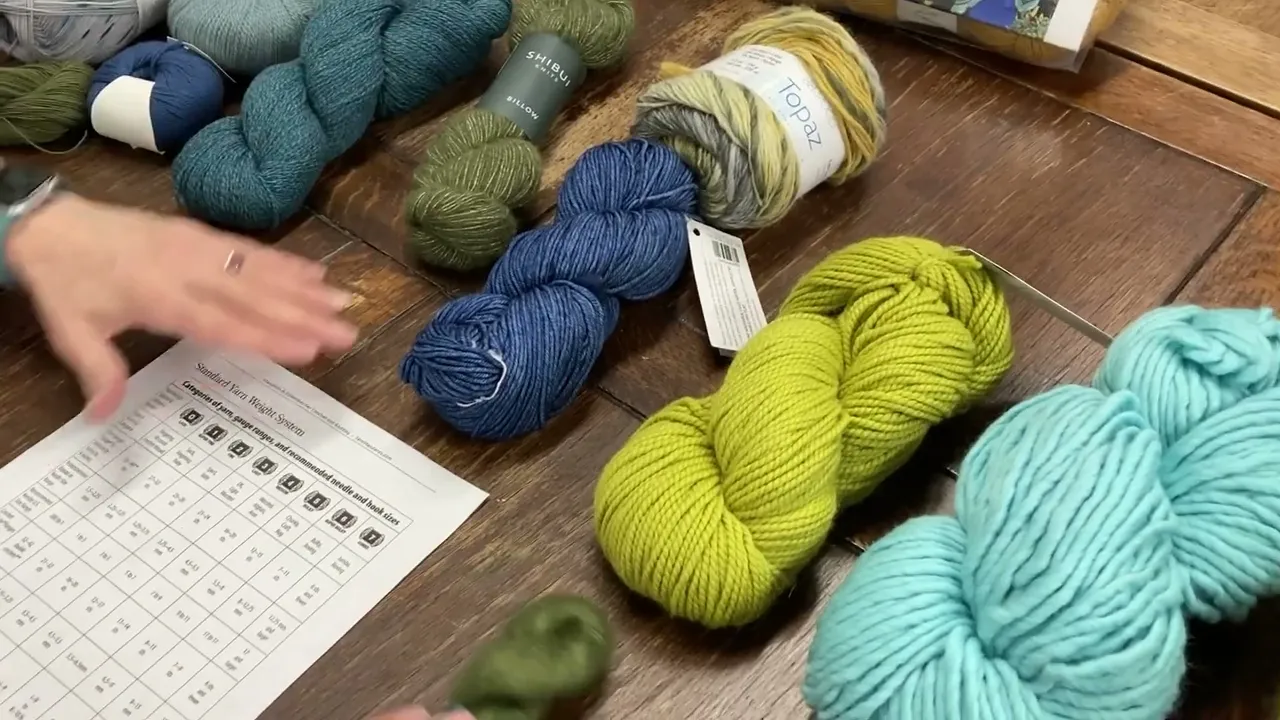
I always check the label first—yarn weights fall into categories from 0 lace to 7 jumbo, with DK as 3 and worsted as 4.
Ply count influences weight, but it's not everything; DK is often 8-ply, while worsted is 10-ply, though fiber type like wool or acrylic changes the feel.
Twist and composition matter too—tighter twists in worsted give structure, and natural fibers add breathability.
You need to swatch for gauge every time; it tells you stitches per inch and prevents wonky sizes.
For DK, expect 21-24 stitches over 4 inches on US G-6 to I-9 hooks; worsted gives 16-20 stitches on I-9 to K-10.5.
Beginners, don't fret if your gauge is off—it's a quick win to frog and retry, building your skills fast.
What Is DK Weight Yarn?
I love reaching for DK weight yarn when I want something light but still substantial—it's my go-to for those quick-win projects that feel luxurious without being too heavy.
DK, or double knitting, sits in Category 3 (Light) according to the Craft Yarn Council standards.
It typically measures around 190–300 yards per 100g skein, though this varies by fiber—merino wool might hit the higher end, while denser cottons sit lower.
For a standard 50g skein, you often see 95–150 yards, making it perfect for stash-busting small accents or full baby garments.
The yarn is often 8-ply, giving beautiful stitch definition for lace, cables, or textured stitches.
I recommend US sizes G-6 to I-9 hooks (4–5.5 mm) for crochet, or needles in a similar range.
Expect a gauge of 21–24 stitches over 4 inches in single crochet or stockinette, though always swatch because your tension might differ.
Common fibers include wool, cotton, acrylic blends, alpaca, and silk—each brings its own drape and feel.
I adore how breathable DK pieces turn out; they're ideal for spring cardigans, lightweight scarves, or summer tops.
The pros? Lighter finished items that dry quickly, great drape, and excellent for intricate patterns.
The cons? Projects take a bit longer than worsted because you're working with finer yarn, and it offers less warmth for deep winter wear.
Beginners, don't stress if your first DK swatch looks uneven—just frog it and try again; the fabric improves fast with practice.
What Is Worsted Weight Yarn?
When I need a project to fly off the hook and keep someone cozy, worsted weight yarn is my instant pick—it's the ultimate quick-win yarn in my stash.
Worsted falls into Category 4 (Medium) per the Craft Yarn Council.
It usually offers 170–240 yards per 100g skein, with many popular acrylics landing around 200 yards.
In a typical 50g skein, expect roughly 85–120 yards, which adds up nicely for hats, mittens, or throw blankets.
Often called 10-ply, it creates a smooth, structured fabric that holds shape beautifully.
Grab US sizes I-9 to K-10.5 hooks (5.5–6.5 mm) for crochet, or matching needles.
The standard gauge runs 16–20 stitches over 4 inches in single crochet or stockinette—again, swatch to match your personal style.
Popular fibers range from classic wool and alpaca to durable acrylic blends and cotton—wool gives that squishy warmth I crave in colder months.
Worsted shines for cozy sweaters, afghans, bags, or anything that needs durability and structure.
Pros include faster project completion, added insulation, and forgiving tension for beginners.
Cons? The finished pieces feel heavier and have less flowy drape compared to DK.
If you're just starting out, worsted is super forgiving—mistakes blend right in, and you'll finish that first hat in no time.
Grab a skein, hook up a quick swatch, and you'll see why it's a staple in so many cozy living rooms like ours!
Key Differences Between DK and Worsted Weight Yarn
I notice the thickness jump every single time I switch between these two weights.
Worsted is roughly 20–30% thicker than DK, which means your stitches sit closer together and the fabric ends up denser.
That extra bulk shows up right away in yardage too—worsted gives you fewer yards per gram, so you need more skeins for the same size project.
Warmth is the biggest practical difference in my winter rotation.
DK creates breathable, lightweight layers perfect for layering or milder days, while worsted traps heat and feels noticeably cozier when the temperature drops.
Project speed changes dramatically.
A worsted-weight blanket or hat works up about 25–40% faster because each stitch covers more ground—huge for quick wins when I want instant gratification.
Stitch definition flips depending on the pattern.
DK wins for lace, fine cables, and colorwork because the thinner yarn lets every detail pop without muddling.
Worsted excels at bold, chunky cables, ribs, and textured stitches where you want that satisfying, sculptural look.
Drape tells its own story.
DK fabrics flow and move softly—think elegant shawls or drapey cardigans.
Worsted holds structure better, giving you crisp edges on bags, structured sweaters, or anything that needs to stand up to daily wear.
Cost stays fairly close, though worsted often feels cheaper per project because you finish faster and use fewer balls overall.
Availability tilts slightly toward worsted in big-box stores and beginner kits, but DK is everywhere online and in specialty shops.
Similarities Between DK and Worsted Weight Yarn
Both weights live in that sweet mid-range spot that makes them insanely versatile.
I use them interchangeably for sweaters, hats, scarves, blankets, and amigurumi when I’m not being super picky about gauge.
Fiber choices overlap almost completely—wool, acrylic, cotton, alpaca, blends—you name it, both weights come in it.
That means you can mix them in the same project for color-blocking or texture play without fiber drama.
They’re both beginner-friendly in the best way.
Tension mistakes hide easily, the yarn feels substantial enough to hold, and you don’t need tiny hooks that cramp your hands.
Many patterns label both as “medium weight” in casual listings, especially older ones, so there’s a natural bridge between them.
“Light worsted” sits right in the middle and often behaves like a slightly thicker DK or a slightly thinner worsted.
That overlap gives you tons of substitution wiggle room when your stash calls the shots.
Both dry reasonably fast compared to bulky yarns, and both block beautifully when you want to open up lace or even out stitches.
I keep a healthy supply of each because they cover almost every cozy season project I crave.
When to Choose DK vs. Worsted
I reach for DK when I want a project that feels light, elegant, and perfect for layering.
Baby clothes are my absolute favorite DK win—soft cardigans, tiny hats, and blankets that wash easily and dry fast.
Lightweight scarves, shawls, and summer tops drape beautifully with DK, giving you that flowy movement without bulk.
If you're working intricate lace, delicate colorwork, or fine textured stitches, DK lets every detail shine.
Choose DK for spring and early fall projects, or anytime you need breathability in warmer climates.
Worsted is my automatic pick when I crave instant coziness and faster finishes.
Cozy sweaters, chunky cardigans, and afghans fly off the hook with worsted—perfect for deep winter comfort.
Hats, mittens, slippers, and bags need the structure and durability that worsted delivers so reliably.
It’s fantastic for bold cables, thick ribs, or anything that should hold its shape through heavy wear.
Pick worsted for fall and winter makes, or if you live somewhere cold and want maximum warmth.
Seasonal swap tip: I keep both in my stash so I can match the yarn to the weather forecast and my mood.
Beginners, start with worsted for your first few projects—the quicker results keep motivation high, and mistakes blend in more easily.
Substituting DK and Worsted Yarn
Yes, you can absolutely substitute DK for worsted and vice versa, but you must adjust for the thickness difference.
The golden rule: worsted is thicker, so using it in a DK pattern makes the finished item larger; using DK in a worsted pattern shrinks it.
Always start with a generous swatch—work at least 6×6 inches in the stitch pattern the project uses.
To substitute worsted into a DK pattern, drop down one hook size (for example, from I-9 to H-8) and check gauge obsessively.
If substituting DK into a worsted pattern, go up one hook size (say, from J-10 to K-10.5) to compensate for the thinner yarn.
Yardage changes too—expect to use about 20–30% less worsted by weight than DK for the same area, because each stitch covers more space.
Test your substitution on a small sample piece first; wash and block it to see how the fabric behaves.
Real-world success stories happen all the time: I’ve swapped worsted into DK baby blanket patterns by sizing down the hook and still ended up with a perfectly cozy (just slightly larger) result.
Don’t be afraid to frog early if the size feels off—you’ll save yarn and frustration in the long run.
Substitution works best when the pattern isn’t super fitted; loose sweaters, blankets, and accessories forgive gauge tweaks far more than a tailored pullover.
Grab your hook, pull out a couple skeins, and play—worst case, you end up with a cute swatch for your project journal!
Popular Projects and Inspiration
I always feel a little spark of excitement when I match the right yarn weight to the perfect project—it turns a good idea into something you’ll actually finish and love wearing.
DK-weight projects are my sweet spot for delicate, detailed makes that feel special.
Baby cardigans and booties work up so sweetly in DK—soft, washable, and just the right amount of warmth without overheating tiny humans.
Lace shawls and lightweight wraps drape gorgeously with DK; the thinner yarn lets intricate stitch patterns open up beautifully after blocking.
Summer tops, cropped cardigans, and fine-gauge socks are DK favorites in my wardrobe rotation—breathable and elegant for warmer days.
Amigurumi toys love DK too; the tighter stitches give crisp definition to faces and details without making the piece too bulky.
Worsted-weight projects are where I go when I want cozy, fast results that scream “hug me.”
Chunky cable sweaters and cardigans are classic worsted territory—the thick yarn makes those twists pop and keeps you toasty.
Afghans and throw blankets are my ultimate stash-busting worsted win; a few big skeins and a couple weekends later, you’ve got a forever heirloom.
Hats, mittens, cowls, and slippers fly off the hook with worsted—perfect for quick holiday gifts or last-minute winter prep.
Structured bags, market totes, and even simple rugs hold their shape like champs in worsted.
Mixed-weight ideas bring extra fun to the table.
Color-blocked blankets using DK for the main body and worsted for bold border stripes create beautiful contrast in texture and weight.
Textured scarves with worsted stripes and DK lace panels give depth without overwhelming the piece.
Grab patterns from sites like Ravelry (filter by weight), Lion Brand, or free YouTube tutorials—most designers label clearly so you can jump right in.
Next...
Since I know how overwhelming hook sizes can feel when you're staring at a pile of patterns and yarn labels—especially if you're just getting started or trying to match the perfect tool to your DK or worsted stash.
That's why I've put together this straightforward Crochet Hook Size Guide just for you.
We'll cover the basics, a handy conversion chart, recommended sizes for common yarn weights (tying right back to our DK vs. worsted chat), and my top picks for beginners.
Grab your favorite mug of tea, and let's sort this out together!
Crochet Hook Size Basics
I always tell new crocheters the same thing: the hook size is basically the diameter of the shaft (the thick part where your stitches form), measured in millimeters (mm).
Bigger mm = bigger stitches, looser fabric, and faster progress.
Smaller mm = tighter stitches, denser fabric, and more detail.
Most modern hooks show both metric (mm) and US letter/number sizes on the shaft—like "H/8 – 5.00 mm"—which makes life easier.
Always trust the mm measurement first, because US letters/numbers can vary slightly by brand (looking at you, older hooks!).
The Craft Yarn Council (still the gold standard in 2025) provides these guidelines for hook sizes based on yarn weight categories.
Crochet Hook Size Conversion Chart (US, Metric, UK/Old)
Here's a clear, up-to-date conversion table for the most common sizes we actually use (based on Craft Yarn Council standards and popular brands like Clover and Susan Bates).
I focused on the everyday ones—skip the tiny steel hooks unless you're doing thread crochet.
- 2.00 mm → US: B-1 / Old UK: 14
- 2.25 mm → US: B-1
- 2.75 mm → US: C-2
- 3.25 mm → US: D-3
- 3.50 mm → US: E-4
- 3.75 mm → US: F-5
- 4.00 mm → US: G-6
- 4.50 mm → US: 7
- 5.00 mm → US: H-8
- 5.50 mm → US: I-9
- 6.00 mm → US: J-10
- 6.50 mm → US: K-10.5
- 8.00 mm → US: L-11
- 9.00 mm → US: M-13 / N-15 (varies by brand)
- 10.00 mm → US: N/P-15
Pro tip: Print this or screenshot it—it's saved me so many trips back to the yarn store!
Recommended Hook Sizes by Yarn Weight
This is where it gets practical for our DK vs. worsted projects.
I always swatch first, but these are the reliable starting points from the Craft Yarn Council and real-world experience.
For DK / Light (Category 3) yarn:
- Common hooks: 4.00 mm (G-6) to 5.50 mm (I-9)
- My sweet spot: 4.50 mm to 5.00 mm for nice drape and definition without being too loose
For Worsted / Medium (Category 4) yarn:
- Common hooks: 5.50 mm (I-9) to 6.50 mm (K-10.5)
- My go-to for quick wins: 5.50 mm to 6.00 mm—perfect for cozy blankets, hats, and sweaters that work up fast
Beginner bonus: Start with worsted yarn + a 5.50 mm (I-9) or 6.00 mm (J-10) hook.
The bigger stitches are easier to see and count, mistakes hide better, and you'll finish that first scarf or dishcloth in record time—pure motivation boost!
If you're using bulky or super bulky, jump to 8.00 mm+ for those chunky, speedy projects.
Best Crochet Hook Sizes & Tips for Beginners
I love recommending these as starter sizes because they pair perfectly with affordable worsted acrylics (think Red Heart Super Saver or similar).
- Top beginner pick: H-8 (5.00 mm) or I-9 (5.50 mm) — forgiving, comfortable, and versatile for most medium-weight yarns
- Why these? They create stitches big enough to spot errors quickly, but not so huge that your fabric looks holey
- Ergonomic hooks (like Clover Amour or Susan Bates Ergonomic) are my absolute favorite for new hands—they reduce cramps so you can crochet longer without that "ow" feeling
Beginners, don't overthink it.
Grab one or two sizes around 5–6 mm, pair them with worsted yarn, and just start stitching.
Your tension will loosen up with practice, so if your first swatch feels too tight, go up half a size next time—no big deal, and definitely no failure!
Conclusion
The biggest takeaway is simple: DK gives you light, elegant, breathable makes while worsted delivers fast, warm, structured coziness—both are incredible in their own lane.
Neither is “better”; it’s all about what your project needs and what feels good in your hands right now.
Experimenting is the best part—swatch a little DK next to your worsted, see how the fabric changes, and trust what you love.
Mistakes? Totally normal. Frog them, laugh, and keep going; every redo teaches you something useful.
Keep both weights stocked in your stash (or at least one of each) so you’re ready for whatever season or mood hits next.
Drop a comment below and tell me—what’s your favorite DK project so far, or which worsted make you’re wearing right now? I’d love to hear your cozy wins!

The Author
I'm Joanna T. Grey. I've been designing crochet patterns for over a decade, and I focus on modern, wearable pieces with clear, tested instructions. Every pattern here is written so you actually understand the why behind each step—not just what to do. Even if you're new or experienced, you'll find practical guidance and designs that work.


