
Adorable Crochet Frog Free Pattern: Easy Amigurumi Tutorial
There's something irresistibly cheerful about a little crocheted frog peeking out from your hook. This free pattern creates a classic amigurumi style with a round body, floppy limbs, and those big, expressive eyes that make everyone smile. Whether you keep it simple in bright green or add rosy cheeks for extra charm, it's a quick project that delivers big on cuteness.
Perfect as a desk buddy, keychain pal, or gift for someone who needs a bit of whimsy in their day. Grab some worsted weight yarn—affordable acrylics like Red Heart Super Saver are still running around $3–$6 per skein in early 2026—and let's get hopping.
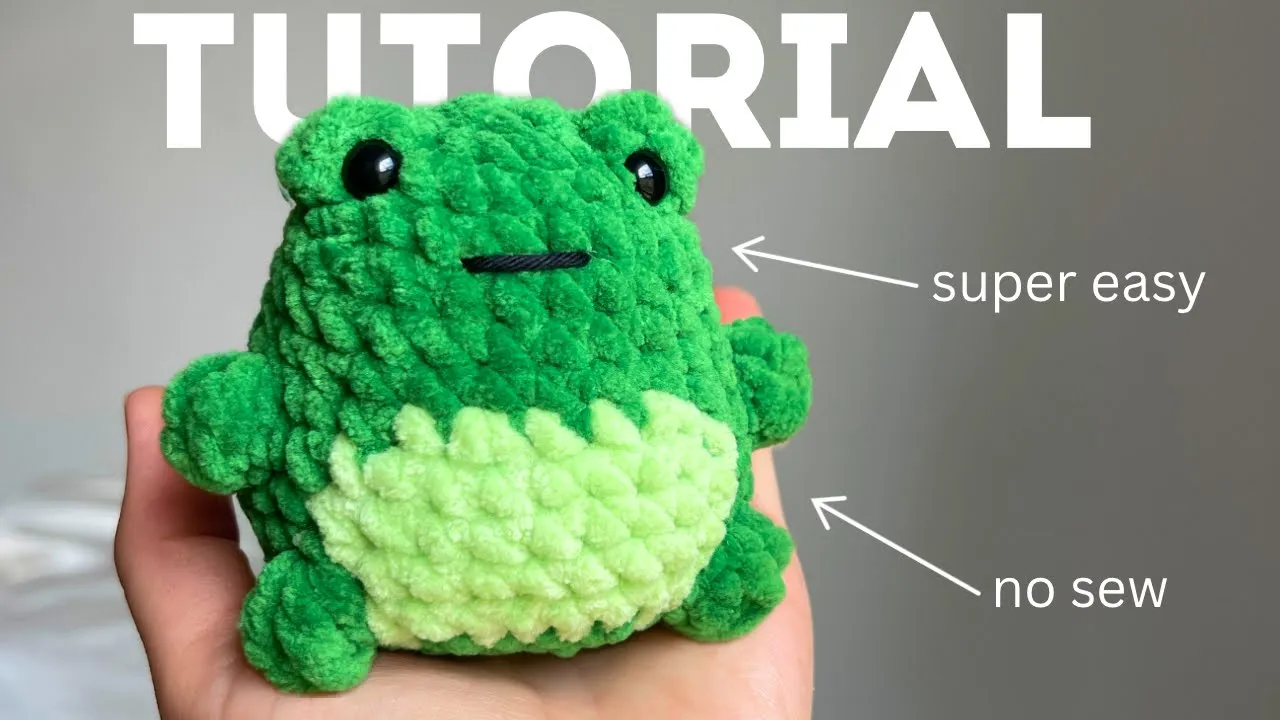
Why You'll Love This Crochet Frog Free Pattern
Leggy frogs and chubby classics have dominated amigurumi trends lately, with dozens of new free patterns popping up in 2025 alone. Their oversized heads and tiny bodies hit that perfect sweet spot of adorable without being complicated.
Quick to finish—most makers wrap one up in a weekend or less. The simple shape relies on basic single crochet rounds, making it satisfying even if you're juggling a busy schedule.
Versatile too. Stitch a whole pond's worth in different colors, add a flower crown, or turn one into a backpack charm. Once the first one is done, the others fly off the hook.
Personal note: the first frog I ever made sat on my windowsill for months, watching over a particularly tough season. Something about those stitched smiles just lifts the mood every time.
Materials Needed
This frog comes together quickly with just a few basics. You'll need around 100 yards of worsted weight yarn in your main green (and small amounts for accents like cheeks or a belly).
Safety eyes are optional—embroidered ones work beautifully if it's for a little one under three. Grab 10–12mm black plastic ones; packs of 100 assorted sizes run about $7–$10 on major sites right now.
A handful of polyester stuffing, yarn needle for sewing pieces, and stitch markers round it out. Scissors are a given.
Small extras like blush for cheeks? Totally up to you. Pink embroidery floss or even a touch of acrylic paint does the trick.
Best Yarn Choices for Crochet Frog Free Pattern
Worsted weight acrylic remains the go-to for amigurumi in 2026 because it's affordable, durable, and holds shape after stuffing.
Red Heart Super Saver stays a favorite—7oz skeins in classic greens like "Spring Green" or "Paddy Green" hover around $4–$6 each online. Machine washable, no-dye-lot solids mean easy matching if you need more.
Premier Anti-Pilling Everyday Worsted edges ahead for toys that get loved hard. At roughly $5 per 3.5oz ball, it resists fuzzing even after dozens of washes—perfect for a frog that might end up in the play bin.
Lion Brand Pound of Love offers massive value: 16oz balls with over 1000 yards for $13–$15. One skein easily covers multiple frogs plus extras like lily pads.
Beginners love these because they don't split easily, and the slight sheen gives clean stitch definition without cotton's stiffness. Once, a rushed frog in cheap acrylic turned fuzzy after one wash—switching to anti-pilling saved the day.
For a softer feel, try a cotton-acrylic blend, but pure acrylic wins for budget and bounce.
Gauge, Size Guide & Must-Have Tools
Gauge isn't strict here since it's a toy, but aim for tight fabric—no stuffing peeking through. With worsted yarn and a 4mm hook, you should get about 5 single crochet stitches per inch.
Finished size lands around 6–7 inches tall with standard worsted and a 4mm hook. Want bigger? Switch to a 5mm hook or bulky yarn for a plush 9-incher.
Smaller version? Drop to DK weight and 3.25mm hook—ends up pocket-sized at 4 inches.
Hook recommendation: Clover Amour ergonomics top the list for comfort during those long single crochet rounds. A 4mm (G/6) glides smoothly; sets run $8–$10 per hook.
Budget option? Aluminum inline hooks like Susan Bates work fine—grab a $2–$3 single.
Must-haves include locking stitch markers (cheap packs of 50 for under $5) and blunt yarn needles.
Safety eyes around 12mm fit perfectly—$8–$10 for bulk packs. Stuff firmly but evenly; overdoing it stretches stitches.
Tweak sizes easily: thicker yarn + larger hook = chubbier frog. Thinner yarn + smaller hook = dainty one.
Pattern Notes & Tips Before You Start
This pattern is worked in continuous rounds—perfect for amigurumi since it avoids visible seams. Place a stitch marker in the first stitch of each round and move it up as you go.
Use the invisible decrease for smoother shaping: insert hook under front loops only of the next two stitches, yarn over and pull through both, then complete as a single crochet. It keeps the surface neat.
Stuff as you go, especially after closing the head and body. Add a bit more right before finishing a section—polyfill compresses over time.
Safety eyes go in early, usually between rounds 10–12 depending on size. If it's for a child under three, embroider eyes instead with black yarn or floss for zero choking risk.
Work with tight tension so stuffing stays hidden. If holes appear, drop down a hook size next time.
Count stitches at the end of every round, especially increases and decreases. A quick tally saves frogging later—trust me, one skipped increase turned a frog into a lopsided tadpole once.
Steam block lightly if using acrylic; it relaxes stitches and evens things out. Cotton holds shape better without it.
For color changes, carry yarn inside or switch cleanly—more on that in similar projects like the free crochet butterfly pattern.
Common snag: limbs can twist during sewing. Pin them in place first, check symmetry from all angles.
If you're new to amigurumi, practice magic rings on scrap yarn. Nail that, and the rest flows.
Explore more tips in easy amigurumi cat crochet pattern or the free crochet bunny pattern—they share the same techniques.
Abbreviations Explained
All terms here follow standard US crochet conventions—single crochet is our shortest stitch, no "double" confusion with UK patterns.
ch – chain: Yarn over, pull through loop on hook. Forms the foundation or spaces.
sl st – slip stitch: Insert hook, yarn over, pull through both stitch and loop on hook. Great for joining rounds invisibly or moving across stitches without height.
sc – single crochet: Insert hook, yarn over pull up loop, yarn over pull through both. The tightest, sturdiest stitch—backbone of most amigurumi.
inc – increase: Work two single crochet stitches into the same stitch. Builds width quickly for rounded shapes like heads.
dec – decrease (or sc2tog): Insert hook into first stitch, yarn over pull up loop, insert into next, yarn over pull up loop, yarn over pull through all three. Shapes curves; use invisible version for cleaner look.
hdc – half double crochet: Yarn over first, insert hook, yarn over pull up loop, yarn over pull through all three. Slightly taller than sc, sometimes used for accents.
dc – double crochet: Yarn over, insert hook, yarn over pull up loop, (yarn over pull through two) twice. Adds height fast—occasional in legs or details.
MR – magic ring (or magic circle): Loop yarn around fingers, work stitches into adjustable ring. Best start for tight, closed centers—way better than loose chains.
rnd(s) – round(s): Full circle of stitches in amigurumi.
st(s) – stitch(es): The individual loops you work into.
BLO – back loop only: Work into the back loop for ridged texture—common in frog bellies or limbs.
FLO – front loop only: Opposite of BLO, leaves a ridge on the right side.
Similar animals use the same shorthand—try the free crochet chicken pattern or crochet octopus pattern next for practice.
Once these click, patterns read like second nature. You've got this.
Step-by-Step Crochet Frog Free Pattern
This classic chubby amigurumi frog works up in one main piece for the head and body, with separate arms, legs, and eyes for easy customization. Finished size is about 7 inches tall with worsted yarn and a 4mm hook—perfect desk size.
All pieces are crocheted in continuous rounds unless noted. Use a stitch marker to track the first stitch.
Stuff firmly but gradually; add more as you close sections to keep the shape round and bouncy.
Safety eyes go between rounds 12 and 13 of the head, about 10 stitches apart. Embroider if preferred.
Switch colors cleanly by completing the last yarn over of the previous stitch with the new color.
Eyes (Make 2)
Start with white yarn.
Rnd 1: MR with 6 sc (6 sts)
Rnd 2: Inc in each st around (12 sts)
Rnd 3: (Sc, inc) x 6 (18 sts)
Rnd 4: Sc, inc, (2 sc, inc) x 5, sc (24 sts)
Rnd 5-7: Sc in each st around (24 sts)
Insert 12mm safety eye in the center (between Rnds 2-3 of the eyeball) and secure washer now—easier before closing.
Switch to green yarn.
Rnd 8-10: Sc in each st around (24 sts)
Rnd 11: Sc, dec, (2 sc, dec) x 5, sc (18 sts)
Rnd 12: (Sc, dec) x 6 (12 sts)
Stuff lightly.
Rnd 13: Dec x 6 (6 sts)
Fasten off, thread tail through front loops and pull tight to close. Leave long tail for sewing.
Similar eye techniques show up in the free easy amigurumi cat crochet pattern—great practice if these feel tricky.
Arms (Make 2)
With green.
Rnd 1: MR with 6 sc (6 sts)
Rnd 2: Inc x 6 (12 sts)
Rnd 3: (Sc, inc) x 6 (18 sts)
Rnd 4-6: Sc around (18 sts)
Rnd 7: (Sc, dec) x 6 (12 sts)
Rnd 8-16: Sc around (12 sts)
Stuff lightly halfway; arms stay floppy at the ends.
Rnd 17: Dec x 6 (6 sts)
Fasten off, close opening, leave long tail for sewing.
Legs (Make 2)
With green.
Rnd 1: MR with 6 sc (6 sts)
Rnd 2: Inc x 6 (12 sts)
Rnd 3: (Sc, inc) x 6 (18 sts)
Rnd 4: Sc, inc, (2 sc, inc) x 5, sc (24 sts)
Rnd 5-8: Sc around (24 sts)
Rnd 9: Sc, dec, (2 sc, dec) x 5, sc (18 sts)
Rnd 10-12: Sc around (18 sts)
Rnd 13: (Sc, dec) x 6 (12 sts)
Rnd 14-20: Sc around (12 sts)
Stuff firmly to the knee, lighter toward the top for bend.
Rnd 21: Dec x 6 (6 sts)
Fasten off, close, leave long tail.
Longer limbs like these appear in the free crochet snake pattern if you want to experiment with posing.
Head and Body (One Piece)
Start at the top of the head with green.
Rnd 1: MR with 6 sc (6 sts)
Rnd 2: Inc x 6 (12 sts)
Rnd 3: (Sc, inc) x 6 (18 sts)
Rnd 4: Sc, inc, (2 sc, inc) x 5, sc (24 sts)
Rnd 5: (3 sc, inc) x 6 (30 sts)
Rnd 6: 2 sc, inc, (4 sc, inc) x 5, 2 sc (36 sts)
Rnd 7: (5 sc, inc) x 6 (42 sts)
Rnd 8: 3 sc, inc, (6 sc, inc) x 5, 3 sc (48 sts)
Rnd 9: (7 sc, inc) x 6 (54 sts)
Rnd 10: 4 sc, inc, (8 sc, inc) x 5, 4 sc (60 sts)
Rnd 11-20: Sc around (60 sts) — place safety eyes between Rnds 12-13, 10 sts apart if not using embroidered.
Rnd 21: 4 sc, dec, (8 sc, dec) x 5, 4 sc (54 sts)
Rnd 22-24: Sc around (54 sts)
Rnd 25: (7 sc, dec) x 6 (48 sts)
Rnd 26-28: Sc around (48 sts)
Rnd 29: 3 sc, dec, (6 sc, dec) x 5, 3 sc (42 sts)
Rnd 30-32: Sc around (42 sts)
Start stuffing head firmly.
Rnd 33: (5 sc, dec) x 6 (36 sts)
Rnd 34-36: Sc around (36 sts)
Rnd 37: 2 sc, dec, (4 sc, dec) x 5, 2 sc (30 sts)
Rnd 38-42: Sc around (30 sts)
Add more stuffing.
Rnd 43: (3 sc, dec) x 6 (24 sts)
Rnd 44-46: Sc around (24 sts)
Rnd 47: Sc, dec, (2 sc, dec) x 5, sc (18 sts)
Rnd 48: Sc around (18 sts)
Finish stuffing body firmly.
Rnd 49: (Sc, dec) x 6 (12 sts)
Rnd 50: Dec x 6 (6 sts)
Fasten off, close bottom.
Assembly and Finishing
Sew eyes to head top, centered over Rnds 8-18, about 8 visible stitches between them.
Attach arms at sides around Rnd 35-37 of body, slightly forward for hugging pose.
Sew legs to bottom, spaced so frog sits stably—usually Rnds 44-48, angled outward.
Embroider rosy cheeks with pink yarn in small circles under eyes, spanning 3-4 stitches.
Add a smile with black yarn between Rnds 18-20, about 8 stitches wide, curved up at ends.
Weave in all ends securely.
Optional: Add a tiny flower crown or bow—quick chains and slips.
Your frog is ready to hop into someone's heart. Beginners often surprise themselves with how polished these turn out.
For belly color changes or spots, see tips in the free crochet chicken pattern or crochet octopus pattern.
Similar rounded bodies make great bases—try the free crochet bunny pattern next for variety.
One maker shared how their first frog became a comfort item during travel—those little faces really do cheer up any space. Enjoy every stitch.
Easy Variations & Custom Ideas
Switch up the colors for instant personality—try pastel pink for a strawberry frog vibe or deep navy with yellow spots for a poison dart look. Makers are loving gradient yarns this season too.
Add accessories: a tiny crochet crown (just a few chains and slips), scarf, or even a backpack. These little extras take minutes but make each frog unique.
Change the size easily—go up to a 5mm hook with the same worsted yarn for a plush 9-inch version, or drop to DK weight for a keychain mini.
Embroider details like hearts, stars, or freckles on the cheeks. Pink floss for blush remains a top trend in 2026 amigurumi groups.
Make a family: one big frog and several small ones using the same pattern scaled down. Great for gifts or shelf displays.
Stuff with weighted pellets in the bottom for a bean-bag feel that helps it sit upright.
Add floppy long legs by extending the arm/leg rounds—popular "leggy frog" style still going strong.
Combine with other patterns: attach to a hat or bag. Check the crochet octopus pattern for tentacle ideas that could inspire wavy limbs.
These variations keep the project fresh every time. Start simple, then play—your frog will evolve with you.
Similar custom fun awaits in the free crochet bunny pattern or easy amigurumi cat crochet pattern.
Common Troubleshooting and Fixes
Head too pointy? Add an extra plain round after the increases before starting decreases—evens out the shape nicely.
Stuffing showing through? Switch to a smaller hook or tighter yarn like Premier Anti-Pilling Everyday, still around $4–$5 per ball in early 2026.
Limbs wonky when sewing? Pin everything in place first, step back, adjust symmetry. Whip stitch loosely at first, then tighten.
Eyes uneven? Count rounds carefully from the top down, mark with pins. Safety eyes snap in permanently, so place wisely.
Bottom doesn't sit flat? Add a cardboard circle inside before closing, or stuff the lower body firmer.
Yarn splitting? Red Heart Super Saver holds up well at $4–$6 per skein currently—less splitting than some softer brands.
Decreases looking holey? Use invisible decreases consistently; they blend better.
One time, a frog's leg twisted during attachment—unpicked, flattened the piece, resewn flat against the body. Problem solved.
For more assembly tips, the free crochet chicken pattern shares similar limb fixes.
Most issues fix with a quick tweak. Rip back if needed—acrylic forgives frogging beautifully.
Next-Level Tips
Surface crochet spots or stripes after assembly for textured detail—hold contrasting yarn and slip stitch across the body.
Try velvet yarn for a plush feel, though it hides stitches more; great for experienced hands wanting luxury.
Add wire in limbs for posable arms and legs—thin floral wire wrapped in yarn works.
Facial expressions: curved smile higher for happy, lower for sleepy. Tiny felt pieces glued behind eyes for shine.
Block pieces lightly with steam (acrylic safe) for professional shape.
No-sew variation: work limbs directly off the body—saves time once you're comfortable.
Blend yarns: hold a strand of mohair with worsted for fuzzy halo effect.
Charity note: these make wonderful donations—check local rules, but embroidered eyes preferred for safety.
Explore advanced shaping in the free crochet snake pattern easy or free crochet butterfly pattern easy.
Your skills grow with each frog. Keep experimenting—that's where the magic happens.
You Might Also Love These Patterns
- Free Easy Amigurumi Cat Crochet Pattern – Another beginner-friendly animal with the same rounded shaping techniques.
- Free Crochet Bunny Pattern – Classic floppy-eared friend, perfect next step after your frog.
- Crochet Octopus Pattern – Wavy tentacles add fun variety while using similar amigurumi basics.
- Free Crochet Chicken Pattern – Quirky farmyard pal with easy color changes for extra personality.
- Easy Crochet Dog Pattern Free Amigurumi Tutorial – Loyal pup companion using the same stitch foundation.

The Author
I'm Joanna T. Grey. I've been designing crochet patterns for over a decade, and I focus on modern, wearable pieces with clear, tested instructions. Every pattern here is written so you actually understand the why behind each step—not just what to do. Even if you're new or experienced, you'll find practical guidance and designs that work.


