
Free Textured Crochet Washcloth Pattern (Beginner-Friendly)
There's nothing quite like reaching for a soft, handmade crochet washcloth at the end of a long day. This simple textured pattern works up in an evening, uses just one ball of affordable cotton yarn, and delivers that perfect balance of scrub and gentleness for face or dishes.
Quick to finish and endlessly useful, it's the kind of project that feels rewarding from the very first stitch. Whether you're gifting a stack or treating yourself, these little squares bring a touch of everyday luxury.
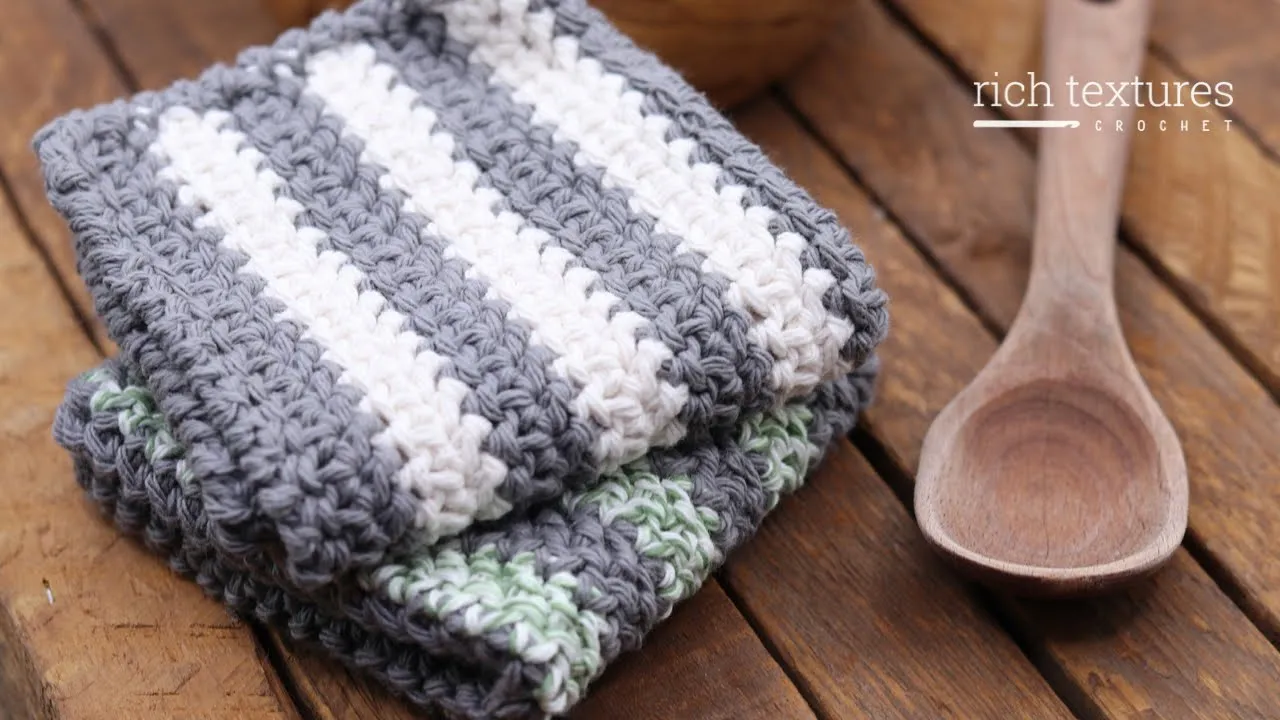
Why You'll Love This Crochet Washcloth Pattern
Practicality tops the list—crocheted washcloths outlast store-bought ones and cut down on waste. Toss them in the wash, and they come out fresh every time.
The texture from basic stitches gives just enough exfoliation without being harsh. Many makers swear by them for gentle face cleansing or tackling kitchen cleanup.
In early 2026, washcloth patterns are surging again, with events like the third annual Winter Washcloth Series featuring 31 new designs in January alone. Crafters keep coming back because one skein (often under $5 for classics like Lily Sugar'n Cream) yields multiple cloths.
One friend started with these during a busy season and ended up hooking a dozen as last-minute gifts—everyone raved about how much better they feel than disposable options.
Materials Needed
Gather just a few basics and you're set to start. This pattern uses about 60-80 yards of worsted-weight cotton yarn—one standard skein will easily make two or three washcloths.
Essential supplies:
- 100-120 yards worsted weight (category 4) 100% cotton yarn
- Size H-8 (5 mm) crochet hook — or whatever gets you close to gauge
- Yarn needle for weaving in ends
- Scissors
Optional but handy: a stitch marker if you like tracking rows, and a small scale for checking yardage on partial skeins.
Cotton is non-negotiable here—it's absorbent, durable, and machine-washable. Skip acrylic; it repels water instead of soaking it up.
Many beginners already have these tools from starter kits. If not, they're inexpensive and will serve dozens of projects ahead.
One maker once grabbed leftover cotton from a market bag and whipped up her first washcloth—no extra shopping required.
Best Yarn Choices for Crochet Washcloth Pattern
Classic Lily Sugar'n Cream remains the top pick in 2026, with skeins typically running $2.50-$4 for 2.5-4 oz at major retailers like Michaels or Walmart. Makers love its tight twist and vast color range, including fresh 2026 shades.
Knit Picks Dishie offers excellent value at around $3-4 per 100g skein, praised for softness and over 50 colors—perfect if you order online and catch a sale.
Premier Home Cotton or Bernat Handicrafter provide similar affordability and durability, often under $5, with blends that soften after a few washes.
For a slight upgrade, Lion Brand 24/7 Cotton gives a mercerized shine and extra strength, ideal for face cloths that need gentle exfoliation.
Beginners find these forgiving: cotton doesn't split much, holds stitches visibly, and mistakes wash out easily.
Check my guide to DK vs worsted weight yarn comparison if you're substituting—most washcloths shine in worsted for thickness.
Peaches & Creme stripes add fun variegation without pooling issues in small projects.
Avoid pricey linen blends for your first ones; save those for when you're hooked on textured cloths.
I once tested a new cotton brand that felt rough at first—after one wash, it bloomed into the softest cloth yet. Patience pays off.
Solid colors show texture best, but ombres create subtle gradients newcomers adore.
Gauge, Size Guide & Must-Have Tools
Gauge isn't critical for washcloths, but aim for 14 stitches and 16 rows in single crochet = 4 inches with an H-8 hook. A looser tension yields drapier cloths; tighter makes them sturdier for dishes.
Standard finished size lands around 8-9 inches square—great for hands and counters alike.
Want larger? Add 6-8 chains to the foundation and matching rows for a 10-11 inch cloth, perfect as a mini hand towel.
Smaller 6-7 inch versions work wonderfully as facial rounds or coasters.
Must-have tools beyond hook and yarn:
- Ergonomic hook if long sessions tire your hand—many swear by Clover Amour for comfort
- Blunt yarn needle (metal or plastic) to weave ends securely
- Blocking mat and pins for squaring up if edges curl
Beginners often skip blocking at first, but a quick steam shapes everything beautifully.
See my best yarn winders for crocheters post if cones tempt you—Dishie cones save money on multiples.
Adjust hook size up or down half a millimeter to match your natural tension; cotton forgives small differences.
One early cloth came out huge because a relaxed grip loosened everything—now those oversized ones are my favorite luxury face towels.
Experiment freely—the beauty of this project lies in using what feels right and tweaking as you go.
For more beginner-friendly projects using similar yarn, try my easy crochet heart pattern free tutorial or free crochet circle pattern tutorial.
Pattern Notes & Tips Before You Start
Take a deep breath—this pattern truly welcomes everyone. Worked entirely in basic stitches with a gentle texture, it builds row by row without complicated increases or decreases.
Key notes to keep in mind:
- US crochet terms throughout (standard for most American patterns)
- The turning chain counts as the first stitch in some rows for easier edging
- Cotton yarn softens beautifully after the first wash, so don't judge texture until then
New crocheters often worry about even tension, but with worsted cotton like Lily Sugar'n Cream (still hovering around $3-5 per skein in early 2026), slight variations disappear after use.
Work in good light and keep your hook hand relaxed—tight gripping leads to sore wrists faster than you'd think.
If edges feel wavy, try going up a hook size; cotton has little drape, so minor adjustments make a big difference.
Many makers weave ends as they go to avoid the rush at the finish. A quick safety tip: always use blunt yarn needles around kids or pets.
For more on tension troubles, check my easy crochet patterns for beginners guide—tons of troubleshooting there.
One early washcloth curled stubbornly until a gentle blocking with pins and steam squared it perfectly. Lesson learned: cotton responds well to a little shaping.
Feel free to pause and count stitches every few rows; catching slip-ups early saves frogging later.
Machine wash warm and tumble dry low—your cloths will bloom softer and hold shape through hundreds of cycles.
Ready to jump in? You've got this.
Abbreviations Explained
Patterns rely on shorthand, but each one is straightforward once broken down. Here's every abbreviation used, with clear explanations and tips.
ch – chain: The foundation of nearly every project. Yarn over and pull through loop on hook. Tip: Keep chains loose for easier stitching into them later.
sc – single crochet: Insert hook, yarn over, pull up loop, yarn over, pull through both loops. The shortest, densest stitch—perfect for sturdy fabrics.
hdc – half double crochet: Yarn over first, insert hook, yarn over, pull up loop (three loops on hook), yarn over, pull through all three. Slightly taller than sc, adds gentle texture.
dc – double crochet: Yarn over, insert hook, yarn over, pull up loop, yarn over and pull through two, yarn over and pull through remaining two. Builds height quickly.
sl st – slip stitch: Insert hook, yarn over, pull through both loop on hook and stitch. Great for joining or smooth edges—keep it loose to avoid puckering.
st(s) – stitch(es): Simple reference to individual or multiple stitches.
rep – repeat: Follow the instructions in asterisks or brackets as directed.
RS/WS – right side/wrong side: RS faces out when finished; texture usually shows best here.
Beginners sometimes mix up sc and hdc height—practice a few swatches to feel the difference.
If a term feels unfamiliar, head over to my free crochet circle pattern tutorial for step-by-step photos of basics.
My first pattern left me googling abbreviations nonstop, but now they read like second nature. You'll get there faster than expected.
Solid explanations make all the difference—bookmark this section if needed, and soon you'll breeze through any pattern.
Step-by-Step Crochet Washcloth Pattern
This textured washcloth features the popular even moss stitch (also called linen stitch in some circles)—a simple combination of half double crochet and chain that creates gentle texture perfect for light scrubbing. Trends in early 2026 show moss and berry variations leading washcloth designs for their balance of density and softness.
Worked flat with an odd number of chains for easy repeating, the pattern stays beginner-friendly while looking polished.
Finished size: approximately 8.5 x 8.5 inches with suggested yarn and hook—ideal handheld size.
One skein of Lily Sugar'n Cream (still a go-to at around $3-5 per ball at Michaels or Walmart in January 2026) yields 2-3 cloths easily.
Foundation Chain
Chain 35 loosely (or any odd number for desired width—33 for slightly smaller, 37 for larger).
Row 1 (Right Side)
Hdc in 3rd ch from hook (skipped chs count as first hdc), ch 1, skip next ch, hdc in next ch; repeat from across.
You end with an hdc. Turn. (35 sts: 18 hdc + 17 ch-1 spaces)
Row 2
Ch 2 (counts as first hdc here and throughout), skip first hdc, hdc in next ch-1 space, ch 1, skip next hdc; repeat from across, ending with hdc in top of turning ch. Turn.
(35 sts: same count)
Rows 3-32 (or until square)
Repeat Row 2.
Work exactly 30 more rows for a perfect square with gauge—count carefully, as the pattern looks similar front and back.
After Row 32, measure: should be about 8.5 inches tall. Add or subtract rows in pairs if needed.
Final count check: Each row maintains 18 hdc and 17 ch-1 spaces.
If you love this stitch, try it in my easy granny square crochet blanket for larger projects using similar basics.
Border (Optional but Recommended)
A simple single crochet border evens edges and prevents curling.
Round 1
Ch 1, sc evenly around all four sides, placing 3 sc in each corner for smooth turns.
Aim for about 33 sc along top/bottom and 31 along sides (adjust to lay flat—no exact count needed). Join with sl st to first sc.
Round 2
Ch 1, sc in each sc around, 3 sc in each corner sc. Join and fasten off.
Weave in ends securely—cotton holds knots well.
Assembly and Finishing
No real assembly required—this works as one piece.
Blocking tips: Wet block by soaking in lukewarm water 10 minutes, gently squeeze (no wringing), pin flat to measurements on a towel or mat, and air dry. Cotton squares up beautifully.
First wash softens everything—machine wash warm, tumble low.
One maker shared her first moss stitch cloth looked a bit stiff pre-wash, but after one cycle it became the family favorite for face cleansing.
Pair with handmade soap for sweet gifts, or stack in neutrals for kitchen duty.
Experiment with stripes by changing colors every few rows—Dishie from Knit Picks (often on sale around $3-4 per skein) offers gorgeous tones.
For more small cotton projects, check my easy crochet heart pattern free tutorial or free crochet butterfly pattern easy.
Troubleshooting: Wavy edges? Go down half a hook size. Too tight? Size up. The beauty lies in adjusting to your hands.
Toss it in daily use—hundreds of washes later, it'll still look great.
Dive in today; your first cloth finishes faster than expected, and the second hooks even quicker.
For beginner stitch practice, revisit my free crochet circle pattern tutorial or expand to best free crochet newborn blanket with similar yarns.
Enjoy every stitch—you deserve these little luxuries.
Easy Variations & Custom Ideas
Switch things up effortlessly—this even moss stitch adapts beautifully to personal touches. Early 2026 trends highlight spa gift sets with matching washcloths and scrubbies, so stacking variations makes perfect presents.
Simple tweaks to try:
- Stripes: Change colors every 4-6 rows for subtle bands—Knit Picks Dishie multis (still around $4-5 per skein online) shift gradually without weaving tons of ends.
- Color blocking: Work the first half in one shade, second in another for modern contrast.
- Add a hanging loop: Chain 12 and slip stitch back for easy drying.
Make them round—start with a magic circle and increase in pattern for facial pads. Or chain longer for rectangular hand towels.
Incorporate a border variation: Try picot edges (sc, ch 3, sc in same st) for delicate flair on face cloths.
Pair with my free crochet butterfly pattern easy appliqué sewn on for kid-friendly fun.
Double-strand with two colors held together for thicker, plusher kitchen versions—Lily Sugar'n Cream holds up wonderfully.
One reader turned leftovers into ombre stacks by blending shades row by row. The result? A gradient set everyone asks about.
Go bold with 2026's vibrant hues—electric teals or fiery corals from new Dishie releases pop against neutral bathrooms.
For more color inspiration, browse my easy crochet heart pattern free tutorial—hearts make sweet embellishments here too.
Common Troubleshooting and Fixes
Edges curling? Cotton often does pre-blocking—wet block firmly and pin those corners square. Steam helps too.
Wavy sides usually mean loose tension on chain spaces—try skipping tighter or dropping half a hook size.
Lost count mid-row? Place a marker in the first hdc after turning—it saves recounting everything.
Cloth too stiff? Switch to a larger hook or softer cotton blend; post-wash softening happens, but starting looser speeds it.
Holes too open for scrubbing? Work the hdc into spaces more snugly, or alternate with single crochet rows.
One early version came out oblong because rows varied—now counting every 10 keeps things even.
Yarn splitting? Lily Sugar'n Cream's tight twist minimizes this, but slow down on insertions if needed.
Border puckering? Ease stitches evenly and add extra in corners—three sc works, but four flattens stubborn ones.
For tension tips, revisit my DK vs worsted weight yarn comparison—great for substitution fixes.
Ends poking out after washing? Weave horizontally through several stitches, then vertically for security.
Next-Level Tips
Ready to elevate? Add surface crochet lines between rows for faux quilting effect—quick and striking.
Experiment with linen stitch variations—swap hdc for dc on alternate rows for taller texture.
Join multiples into a larger towel: Seam four together with slip stitch for luxurious bath size.
Try scented yarns if available, or tuck lavender sachets inside folded stacks for drawer freshness.
Charity makers love these—many 2026 drives accept cotton cloths; bundle with soap for impactful donations.
For advanced small projects, scale up to my easy granny square crochet blanket using similar repeats.
Block every cloth—pinning to exact measurements transforms good to professional.
Label gifts with care instructions—machine wash warm, dry low—and watch recipients light up.
Explore my best yarn winders for crocheters if making dozens; cones speed things along.
You Might Also Love These Patterns
- Easy Crochet Heart Pattern Free Tutorial – Quick appliqués perfect for embellishing your washcloths.
- Free Crochet Butterfly Pattern Easy – Delicate add-ons that turn simple cloths into charming gifts.
- Free Crochet Circle Pattern Tutorial – Great for facial rounds or practicing basics with cotton yarn.
- Easy Granny Square Crochet Blanket – Scale up those beginner skills into cozy throws.
- Easy Crochet Patterns for Beginners – More quick wins to build confidence after your washcloths.

The Author
I'm Joanna T. Grey. I've been designing crochet patterns for over a decade, and I focus on modern, wearable pieces with clear, tested instructions. Every pattern here is written so you actually understand the why behind each step—not just what to do. Even if you're new or experienced, you'll find practical guidance and designs that work.


