
Free Easy Crochet Bunny Pattern Tutorial
I absolutely love a project that flies off the hook, and this new design is exactly that.
I have designed this crochet bunny pattern to be the ultimate palette cleanser between those massive, never-ending blanket projects.
You will find that this project is a fantastic "quick win" that gives you immediate gratification without weeks of commitment.
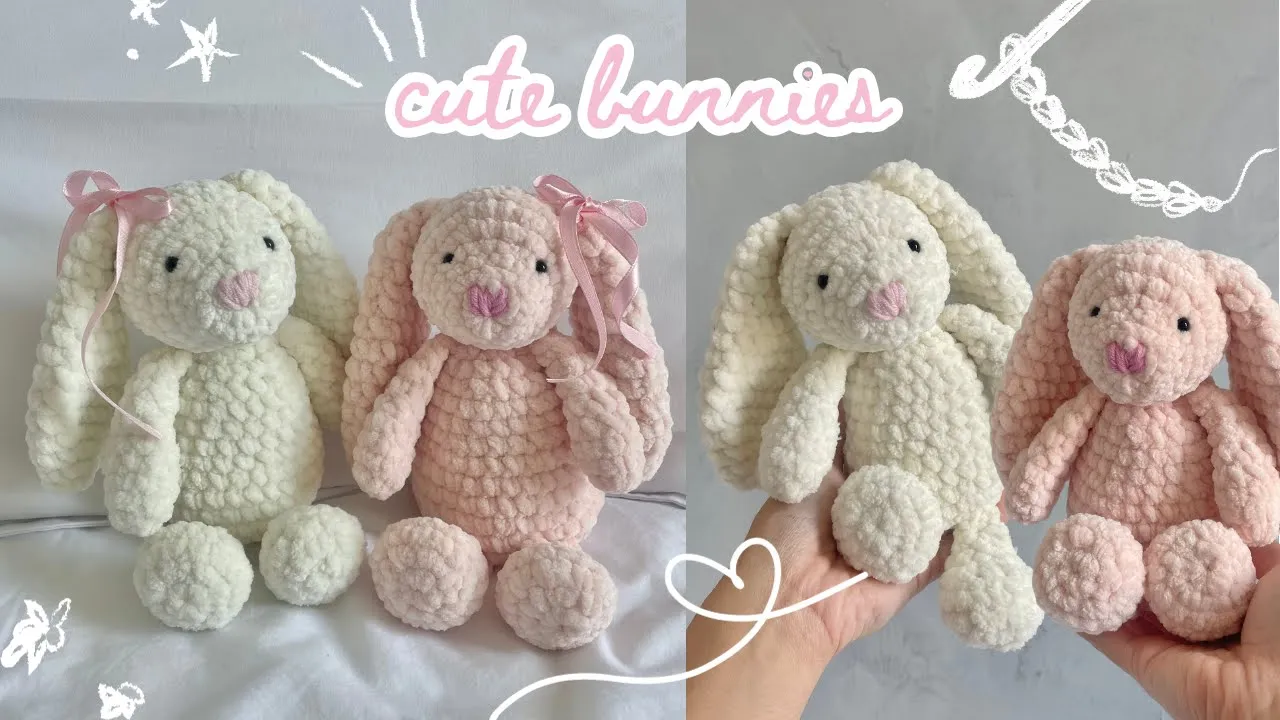
What Is a Crochet Bunny Pattern?
A crochet bunny pattern is a set of written instructions used to create a three-dimensional stuffed rabbit toy, typically using the Japanese art of Amigurumi.
This specific pattern uses worsted weight yarn and a 3.5mm or 4.0mm hook to create a durable, huggable fabric.
I focus heavily on simple shapes in this design, meaning you construct the body and head in one continuous piece to minimize sewing.
You will use standard stitches like single crochet, increases, and invisible decreases to shape the bunny.
I purposefully kept the limbs simple so you can use up those small, annoying balls of leftover yarn rolling around in your stash.
The inspiration behind this design came from my overflowing basket of scrap yarn and a sudden, urgent need for a last-minute baby shower gift.
I looked at my chaotic pile of half-used skeins and realized I had enough yardage to make something substantial if I combined colors creatively.
I wanted to prove that you do not need to buy brand new materials to make something beautiful and professional-looking.
I also wanted to solve the common frustration of "floppy head syndrome" in amigurumi, so I engineered the neck to be sturdy without needing extra support rods.
Why Are Crochet Bunnies Classic?
Crochet bunnies are classic because they remain a timeless nursery staple that fits perfectly into any season, not just Easter.
They appeal to all generations, serving as a nostalgic keepsake for adults and a soft, safe friend for infants.
I see these toys trending consistently every spring, but they are also year-round bestsellers at craft fairs due to their universal appeal.
The silhouette of a bunny is instantly recognizable, which allows for endless customization with accessories like bow ties, skirts, or overalls.
This crochet bunny pattern is not hard to make and is specifically tailored for beginners who are comfortable with holding a hook and yarn.
I have stripped away complex techniques like short rows or complicated colorwork to ensure you succeed on your first try. You only need to know how to make a magic ring, single crochet, and sew a few parts together.
I believe that uneven stitches add character, so please do not stress if your tension isn't machine-perfect.
This is a forgiving project that allows you to practice your counting without high stakes.
Materials Required for This Project
Materials required for this project include items you likely already have in your craft stash.
I recommend using a Worsted Weight (Category 4) acrylic yarn for the best definition and durability.
You will need approximately 50-70 yards of your main color and a small scrap of pink or black for the nose embroidery.
I suggest using a 3.5 mm (E-4) crochet hook, which is smaller than the standard recommendation for worsted yarn, to create tight stitches that prevent stuffing from showing through.
You also need a yarn needle for weaving in ends, a pair of sharp scissors, and polyester fiberfill stuffing.
I highly recommend using a stitch marker (or a scrap of contrasting yarn) to mark the first stitch of every round, as we will work in continuous spirals.
US Crochet Abbreviations
Understanding US crochet abbreviations is essential for reading this pattern correctly.
- MR: Magic Ring (or Magic Circle)
- sc: Single Crochet
- inc: Increase (work 2 sc into the same stitch)
- dec: Decrease (I recommend the "Invisible Decrease": insert hook into front loop of first stitch, then front loop of second stitch, yarn over, pull through two loops, yarn over, pull through remaining two loops)
- st(s): Stitch(es)
- (...) x 6: Repeat the instructions inside the parentheses 6 times.
- [12]: The number inside brackets at the end of the line indicates the total stitch count for that round.
Crochet Bunny Head and Body Instructions
Crochet bunny head and body instructions begin at the top of the head and work downward in one continuous piece to minimize sewing.
R1: Create a MR and work 6 sc into the ring. [6]
R2: Work 1 inc in every st around. [12]
R3: (1 sc, 1 inc) x 6. [18]
R4: (2 sc, 1 inc) x 6. [24]
R5: (3 sc, 1 inc) x 6. [30]
R6: (4 sc, 1 inc) x 6. [36]
R7 – R12: Work 1 sc in every st around. (6 rounds total) [36]
R13: (4 sc, 1 dec) x 6. [30]
R14: (3 sc, 1 dec) x 6. [24]
R15: (2 sc, 1 dec) x 6. [18]
I strongly advise you to start stuffing the head firmly now, focusing on shaping it into a round sphere.
R16: (1 sc, 1 dec) x 6. [12]
R17: (1 sc, 1 inc) x 6. This creates the neck and starts the body expansion. [18]
R18: (2 sc, 1 inc) x 6. [24]
R19 – R23: Work 1 sc in every st around. (5 rounds total) [24]
R24: (2 sc, 1 dec) x 6. [18]
I recommend stuffing the neck area very firmly to prevent the head from wobbling later.
R25: (1 sc, 1 dec) x 6. [12]
Finish stuffing the body.
R26: Dec x 6. [6]
Fasten off, leaving a 6-inch tail. Weave the tail through the front loops of the remaining 6 stitches and pull tight to close the hole.
Crochet Bunny Ear Instructions
Crochet bunny ear instructions require you to make two identical pieces.
R1: Create a MR and work 6 sc into the ring. [6]
R2: (1 sc, 1 inc) x 3. [9]
R3: (2 sc, 1 inc) x 3. [12]
R4 – R8: Work 1 sc in every st around. (5 rounds total) [12]
R9: (2 sc, 1 dec) x 3. [9]
R10: Work 1 sc in every st around. [9]
Fasten off, leaving a long tail (approx. 8 inches) for sewing.
I do not stuff the ears; instead, I flatten them to give them a classic bunny shape.
Crochet Bunny Arm Instructions
Crochet bunny arm instructions are simple tubes that you will make two of.
R1: Create a MR and work 6 sc into the ring. [6]
R2: (2 sc, 1 inc) x 2. [8]
R3 – R7: Work 1 sc in every st around. (5 rounds total) [8]
Fasten off, leaving a long tail for sewing.
I usually stuff only the bottom half of the arms so they can rest flat against the body.
Crochet Bunny Leg Instructions
Crochet bunny leg instructions are slightly wider than the arms to help the bunny sit.
R1: Create a MR and work 6 sc into the ring. [6]
R2: Work 1 inc in every st around. [12]
R3 – R5: Work 1 sc in every st around. (3 rounds total) [12]
R6: (2 sc, 1 dec) x 3. [9]
Fasten off, leaving a long tail for sewing.
I recommend stuffing the legs lightly.
Crochet Bunny Tail Instructions
Crochet bunny tail instructions create a small bobble to attach to the back.
R1: Create a MR and work 6 sc into the ring. [6]
R2: Work 1 sc in every st around. [6] Fasten off, leaving a tail for sewing.
I suggest rolling this piece between your palms to round it out before sewing; stuffing is optional for such a small piece.
Assembly and Finishing
Assembly and finishing brings all your pieces together into a recognizable bunny.
I recommend pinning the ears to the top of the head at R3 or R4 before sewing to ensure they are symmetrical.
Sew the ears securely using the yarn tails and your yarn needle.
I attach the arms between R17 and R18 (right below the neck increase) on either side of the body.
I sew the legs to the front of the body at roughly R22, slightly spaced apart so the bunny can sit on its own.
Sew the tail to the back of the body at R22 to provide extra balance for sitting.
I embroider the nose using pink yarn in a "V" or "T" shape directly between the eyes, usually around R10 or R11 of the head.
If you are using safety eyes, you should have inserted them between R10 and R11 before closing the head; otherwise, embroider the eyes with black yarn now for a baby-safe option.
Adding Personality with Quick Crochet Accessories
I absolutely love adding small accessories because they instantly give your bunny a unique personality without adding hours to your work time.
I find that these mini-patterns are the perfect solution for those tiny scraps of yarn that are too short for a limb but too pretty to throw away.
You can use the same hook size (3.5mm) and yarn weight you used for the bunny to ensure the scale looks correct.
Simple Crochet Bow Tie Instructions
Simple crochet bow tie instructions create a small rectangular fabric that we pinch in the middle to form the shape.
I designed this to be worked flat in rows.
Row 1: Chain 7. Starting in the 2nd chain from the hook, work 1 sc in each chain across. [6]
Row 2: Chain 1 and turn. Work 1 sc in each st across. [6]
Row 3: Chain 1 and turn. Work 1 sc in each st across. [6]
Row 4: Chain 1 and turn. Work 1 sc in each st across. [6]
Fasten off, leaving a very long tail (about 10 inches).
I weave the yarn tail to the center of the rectangle using my tapestry needle.
I wrap the remaining yarn tail tightly around the center of the rectangle 5 to 6 times to cinch it and create the "knot" of the bow.
Secure the yarn with a knot on the back side, but do not cut the tail yet; you will use it to sew the bow to the bunny.
Easy 5-Petal Crochet Flower Instructions
Easy 5-petal crochet flower instructions rely on working entirely into a single magic ring.
I prefer this method over working into a chain circle because you can pull the center tight, eliminating any holes.
Step 1: Create a Magic Ring (MR).
Step 2: (Chain 2, work 2 dc into the ring, chain 2, slip stitch into the ring).
Step 3: Repeat the instructions in the parentheses 4 more times for a total of 5 petals.
Step 4: Pull the magic ring tail tight to close the center hole.
Fasten off, leaving a tail for sewing.
I often sew a small bead or use a French knot in a contrasting color in the center for extra detail, though this is optional.
Attaching Accessories to Your Bunny
Attaching accessories to your bunny requires just a few strategic stitches to ensure they withstand play.
I recommend pinning the accessory in place first to check the positioning.
For the bow tie, I sew it directly onto the neck area (around R16 and R17) using the long tail left over from wrapping the center.
I make sure to stitch through the center "knot" of the bow and into the bunny's neck fabric multiple times so it cannot be pulled off.
For the flower, I usually attach it right at the base of one ear.
I stitch through the center of the flower and into the head, rather than sewing down every petal, to give it a nice 3D effect.
Choosing the Right Materials for Your Crochet Bunny
I always say that the secret to a stress-free "quick win" project starts with the yarn sitting in your lap.
I recommend using a 100% Acrylic Worsted Weight yarn, specifically something like Red Heart Super Saver or Lion Brand Vanna’s Choice.
Why Acrylic Worsted Yarn Is Best for Beginners
Acrylic worsted yarn is the best choice for beginners because it provides excellent stitch definition and is very forgiving if you need to "frog" (rip out) your work.
I find that the slight "grip" of acrylic fibers prevents the yarn from sliding off your hook too quickly, which is a common frustration when you are just starting.
This yarn is also widely available and inexpensive, meaning you can practice without feeling like you are wasting luxury materials.
I prefer acrylic for toys because it is durable and holds its shape well even after being squeezed by little hands.
The "worsted" weight (labeled with a number 4 on the wrapper) is thick enough to see each individual stitch clearly, making it much easier to count your rows.
Understanding Gauge in Amigurumi
Gauge is the measurement of how many stitches and rows fit into a specific square area, usually 4x4 inches.
I do not believe beginners should stress over achieving a perfect gauge for this bunny, as it is not a fitted garment like a sweater.
However, your gauge must be tight enough so that the polyester stuffing does not poke through the holes between your stitches.
I suggest checking your fabric after the first few rounds of the head; if you can see large gaps, you should switch to a smaller hook size.
I typically aim for a firm, stiff fabric that feels more like a canvas than a draped scarf.
Tools and Essential Notions
Tools for this project include more than just a hook; you need a few specific notions to make the assembly process seamless.
I recommend a 3.5mm (E-4) Aluminum Crochet Hook because the metal surface allows the yarn to glide smoothly without snagging.
You will need Stitch Markers to keep track of the first stitch of your continuous rounds; a simple safety pin or a scrap piece of yarn works perfectly if you don't have professional markers.
I suggest using a Bent-Tip Tapestry Needle for sewing the limbs, as the slight curve in the needle makes it much easier to scoop through the stuffed body pieces.
You should also have a pair of Sharp Embroidery Scissors for clean cuts, as dull kitchen scissors can fray the yarn ends.
Final Size and Dimensions
The final size of your bunny will depend entirely on your individual tension and the specific yarn brand you choose.
I find that using worsted weight yarn with a 3.5mm hook usually results in a bunny that stands approximately 7 to 9 inches tall (including the ears).
If you decide to use a thinner yarn (like DK weight), your bunny will turn out smaller, likely around 5 inches.
I love this size because it is large enough to be a substantial gift but small enough to fit in a coat pocket or a backpack.
If you want a giant bunny, you can simply "double strand" your yarn (hold two strands together) and use a 6.0mm hook!
Essential Pattern Notes for Success
I want you to feel completely confident before you make your first slip knot, so I have gathered these essential notes to guide your hands.
Pattern Notes for Beginners
Pattern notes are the "rules of the road" that help you navigate the instructions without getting lost.
I have written this pattern in continuous spirals, which means you do not join the end of a round with a slip stitch; you simply keep stitching right into the top of the first stitch of the previous row.
A stitch marker is your best friend here because it is very easy to lose your place in a spiral; I always move my marker up to the first stitch of every new round so I never have to guess.
The term multiple refers to the mathematical repeat of the pattern; in this bunny, most rounds are a multiple of 6, which keeps the shaping perfectly symmetrical and easy to count.
I recommend using the invisible decrease method for all "dec" instructions because it prevents the small bumps or gaps that a standard decrease can sometimes leave in stuffed toys.
I suggest stuffing as you go, particularly for the head and body, because it is much harder to push fiberfill through a tiny hole once you reach the final round.
Glossary of Abbreviations
Glossary of abbreviations provides the specific definitions for every shorthand term used throughout this tutorial.
- MR (Magic Ring): An adjustable loop method used to start 3D projects so there is no hole in the center.
- Ch (Chain): The most basic crochet stitch, used here to create the height for the bow tie and flower petals.
- Sc (Single Crochet): The primary stitch for amigurumi; it creates a dense, sturdy fabric.
- Dc (Double Crochet): A taller stitch used only in the flower pattern to create the curve of the petals.
- Inc (Increase): Placing two single crochet stitches into the exact same stitch from the row below to expand the piece.
- Dec (Decrease): Combining two stitches from the row below into one single stitch to narrow the piece.
- Sl st (Slip Stitch): A flat stitch used to join rounds or finish off the edges of the accessories.
- St(s) (Stitch/Stitches): The individual units of crochet work.
- [#] (Stitch Count): The number at the end of each row telling you exactly how many stitches you should have when you finish that round.
I am so incredibly proud of you for diving into this project and I hope you enjoyed every single stitch of your new bunny!
I find that there is nothing quite as satisfying as seeing a pile of scrap yarn transform into a little character with a personality all its own.
I would absolutely love to see your finished creations, whether they are perfectly neat or full of "beginner's charm"—every bunny is beautiful!
Please share your photos with me on social media or drop a comment below to tell me what color yarn you pulled from your stash.

The Author
I'm Joanna T. Grey. I've been designing crochet patterns for over a decade, and I focus on modern, wearable pieces with clear, tested instructions. Every pattern here is written so you actually understand the why behind each step—not just what to do. Even if you're new or experienced, you'll find practical guidance and designs that work.


