
Easiest Crochet Stitches That Still Look Impressive
There's a category of crochet stitches that feel like cheating. They use nothing but single and double crochet. The repeats are simple enough to memorize in two rows. Yet the finished fabric looks textured, complex, and far more skilled than the effort involved. These stitches are perfect for gifts, market makes, and projects where you want maximum visual impact for minimum brainpower.
The secret these stitches share is clever placement. Instead of working into the usual top loops, they shift where the hook goes — into chain spaces, around posts, between stitches. That small change in insertion point creates texture that reads as "advanced" while using exactly the same motions you already know. If you can single crochet and double crochet with even tension, you can make every stitch here.
Each stitch below includes why it looks impressive, how easy it actually is, and a real project on this site where you can see it in action. For help identifying the basic stitches these patterns combine, the what crochet stitch actually looks like guide keeps a visual reference handy.
Moss Stitch — The Woven Wonder
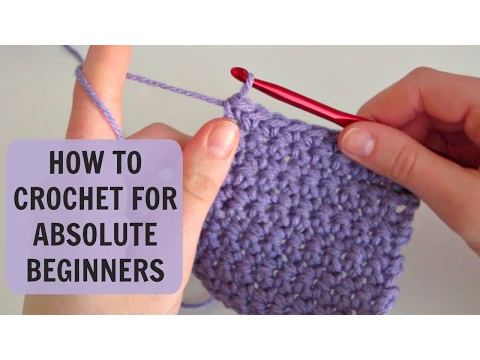
Moss stitch looks like a woven textile. The alternating single crochet and chain-1 spaces create a grid pattern that reads as fabric, not yarn. Both sides look identical, so there's no wrong side. The edges stay perfectly flat with no curling. It drapes beautifully. For a stitch this simple, the finished result is almost suspiciously elegant.
The entire pattern: chain an odd number. Row 1: sc in 3rd chain from hook, ch 1, skip 1, sc in next chain, repeat to end. Row 2 and all subsequent rows: ch 2, sc in first chain-1 space, ch 1, sc in next chain-1 space, repeat. Those chain spaces are enormous obvious targets. You'll never wonder where the hook goes next. The crochet moss stitch tutorial walks through every row with photos.
Moss stitch blankets look like heirloom pieces. Moss stitch scarves look like something from a boutique. The stitch impresses because the woven appearance is so different from what people expect crochet to look like. No one guesses it's just single crochet and chains.
Granny Stitch — Vintage Charm at Top Speed
Granny stitch is iconic for a reason. Those clusters of three double crochets with chain spaces between them create a fabric that's instantly recognizable and permanently charming. The vintage aesthetic is perpetually in style. Granny stitch cardigans, blankets, and bags sell consistently at craft markets because the look has such broad appeal.
Complexity-wise, granny stitch is a one-row repeat. Work groups of three double crochets into the chain spaces of the previous row, separate them with a chain. That's it. The chain spaces are huge targets. The clusters hide individual stitch inconsistencies — if one double crochet is slightly off, the other two in the cluster balance it out. The classic granny square pattern uses the same stitch in motif form.
What makes granny stitch feel like a cheat code is the speed. Those large chain spaces mean you're making fewer stitches per row than solid fabric. The clusters cover width fast. A granny stitch throw blanket works up in a fraction of the time a solid-stitch blanket would take. The speed plus the vintage aesthetic equals a project that wows people without eating your entire year.
Lemon Peel Stitch — Texture That Hides Everything
Lemon peel stitch might be the most forgiving stitch in crochet. It alternates single crochet and double crochet. On the return row, you work single crochet into the double crochets below and double crochet into the single crochets below. The alternating heights create a bumpy, pebbled texture that completely masks uneven tension.
If your single crochets run tight and your double crochets run loose — a super common beginner experience — lemon peel stitch makes that inconsistency look intentional. The pattern expects the stitches to have different heights. Slight variations within each stitch type just add to the organic texture. It's the stitch equivalent of a chunky knit sweater where every irregularity adds character.
The finished fabric has a nubby, satisfying texture that begs to be touched. Lemon peel stitch blankets feel substantial and warm. Lemon peel dishcloths have excellent scrubbing power. The stitch is thicker than plain single crochet and more interesting to look at, while being significantly easier than any other textured stitch at this visual level.
V-Stitch — Elegant Lace Made Simple
V-stitch produces a fabric so pretty and open that people assume it's complicated. The repeating V shapes create a delicate, lacy grid that looks like heirloom handwork. In reality, it's double crochet, chain 1, double crochet — all in the same space — repeated endlessly. Two rows and you'll have the pattern memorized.
The openness is the wow factor. V-stitch fabric has beautiful drape and a lightness that solid stitches can't match. It's perfect for shawls, summer wraps, and market bags. The mesh market bag pattern uses similar openwork principles. A V-stitch shawl in a gradient yarn cake looks like a high-end boutique item. The secret is that it took about four hours and zero concentration.
The key to making V-stitch look impressive is consistent chain-1 tension. Keep those chain spaces the same size. If some chains are loose and others tight, the V shapes will vary and the grid will look wobbly. Focus on that chain tension for the first few rows and the rest takes care of itself.
Shell Stitch — Decorative Drama With Zero Difficulty
Shell stitch creates those gorgeous scalloped fans that make borders and blankets look professionally designed. Five double crochets in one stitch fan out into a shell. A single crochet anchors the shell to the fabric. Skip stitches, repeat. The resulting scalloped edge is one of the most decorative effects in crochet, and it's genuinely just counting to five.
The visual impact of shell stitch far exceeds its difficulty. A plain single crochet blanket bordered with shell stitch suddenly looks like a gift-shop item. A shell stitch baby blanket in pastel yarn screams "heirloom." The shells create three-dimensional texture that catches light and shadow, adding depth without complex techniques.
Consistency matters for shells. Each shell should have the same number of stitches, and the skips between shells should be uniform. Count out loud at first: "one, two, three, four, five." After a few repeats, the rhythm locks in. The scallop edge crochet crossbody bag uses shell stitch as a decorative border that transforms a simple bag into something special.
Herringbone Half-Double Crochet — The Designer Look
Herringbone half-double crochet creates a diagonal woven pattern that looks like a high-end knit stitch. The slant of each stitch overlaps the previous one, producing a fabric that resembles expensive woven textiles. People will ask what stitch you used. You'll say "herringbone half-double" and sound like you know things. The reality: it's a tiny modification to half-double crochet.
The modification: after you yarn over and insert the hook, you pull through the stitch and the first loop on your hook in one motion, then yarn over and pull through the remaining two loops. That extra pull-through creates the signature slant. It takes about ten stitches to get the rhythm, then it's as automatic as standard HDC.
Herringbone HDC impresses because the diagonal texture is so different from the horizontal-vertical grid people associate with crochet. It reads as intentional and sophisticated. A herringbone HDC scarf in a solid color yarn looks like a designer accessory. The stitch works best in solid or heathered yarns where the diagonal lines can be clearly seen.
Even Moss Stitch — The Polished Cousin
Even moss stitch alternates half-double crochet and slip stitch across the row. On the return row, you work half-double crochet into the slip stitches below and slip stitch into the half-double crochets below. The result is a beautifully balanced fabric with subtle texture that's more refined than classic moss stitch.
The slip stitches create flat, dense lines. The half-double stitches create slightly raised, textured lines. Together they form a fabric that looks knit and feels substantial. Even moss stitch makes stunning scarves and blankets that look store-bought in the best way. The texture is subtle enough to work in professional settings — a scarf or wrap in even moss stitch pairs well with business attire.
The rhythm is easy to fall into: hdc, sl st, hdc, sl st. On the way back, you do the same thing but reversed — sl st into the hdc below, hdc into the sl st below. It's a two-row repeat that becomes automatic quickly. The combination of stitch heights creates gentle wales that add depth without bulk.
Corner-to-Corner (C2C) — The Graphic Showstopper
Corner-to-corner crochet builds fabric on the diagonal using blocks of three double crochet. It's the technique behind those beautiful graphgan blankets with pixel-art designs. The diagonal construction looks complicated and intimidating. The actual stitch is just double crochet clusters with chain spaces, increased or decreased at the edges to shape the piece.
C2C impresses because the diagonal lines naturally draw the eye across the fabric. Even a solid-color C2C blanket has visual movement that row-based crochet lacks. Add color changes and you get pixel-perfect designs that look like they required advanced skills. The reality is that C2C is easier to keep straight than row-based work because the diagonal construction naturally prevents curling and your stitch count is obvious at a glance.
The learning curve for C2C is slightly steeper than the other stitches here, but not by much. Once you understand how the increase and decrease blocks work, the whole technique clicks. It's the most impressive stitch on this list relative to actual difficulty, and it's the gateway to customizable graph designs.
Why These Stitches Work So Well
Each stitch on this list shares a common trait: the eye perceives complexity that the hands don't feel. The woven look of moss stitch. The scalloped drama of shell stitch. The diagonal sophistication of herringbone HDC. None of these require new techniques beyond single crochet, double crochet, and the ability to count to five. The gap between perceived difficulty and actual difficulty is where these stitches live.
These stitches also photograph beautifully. If you're sharing your makes on social media or selling at markets, visual impact matters. A moss stitch blanket gets more engagement than a single crochet blanket of the same quality. A shell stitch border makes a simple project shareable. When the stitch does some of the heavy lifting for presentation, you get more satisfaction from the finished piece.
Pick one stitch from this list. Make a scarf or a small blanket. Notice how the rhythm settles in after a few rows. Notice the compliments. Notice how the finished piece feels in your hands. These stitches prove that impressive crochet doesn't require years of experience. It just requires knowing which stitches deliver the most impact for the least complexity.

The Author
I'm Joanna T. Grey. I've been designing crochet patterns for over a decade, and I focus on modern, wearable pieces with clear, tested instructions. Every pattern here is written so you actually understand the why behind each step—not just what to do. Even if you're new or experienced, you'll find practical guidance and designs that work.


